A Sunday Table Reset for a Week of Shared Meals
A Sunday table reset turns the meals your household expects to share into a simple setup, with clear places for everyday dishes and room to adjust.
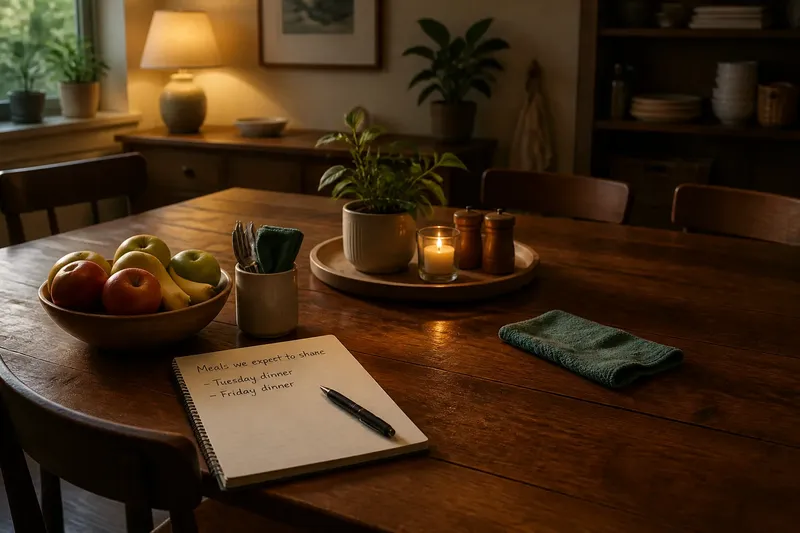
On Sunday evening, a stack of mail, a fruit bowl, and yesterday’s cups may be sharing the dining table. A Sunday table reset clears the surface and prepares it for the meals your household expects to share, without assigning every day a fixed menu. The point is to make eating together easier to begin, then leave enough space for plans to change.
Set aside a brief stretch of time and gather a notepad, a pen, and a damp cloth. You do not need a new organizer or a perfectly styled table. Work through these eight steps in order, stopping when the table can support the meals you actually expect to share.
1. Clear the surface before planning
Remove anything that does not belong to a meal: mail, craft supplies, shopping bags, and cups left behind. Return each item to its usual home rather than pushing the pile onto another chair. Wipe the surface once it is clear.
This gives you an honest view of the table’s usable space. It also keeps you from planning around clutter that can be put away in a moment. Leave a centerpiece in place only if it does not take up the room needed for plates, serving dishes, or a shared activity.
If the table doubles as a work surface, decide what must be moved before dinner and where it will go. A tray or shallow basket can collect small items temporarily, but it should have a clear destination afterward. The table should be ready to return to its meal role without a second round of sorting.
2. Name the meals people expect to share
Ask the people in your household which meals they currently expect to eat at home together. Include only the plans that seem likely enough to shape the table setup: perhaps a weeknight dinner, a weekend breakfast, or a meal with a visiting relative. Do not fill in the entire week just because there is room on the page.
Write each shared meal on a short list, with a rough day or time if that helps people remember it. Keep the list visible while you set up. It is a planning aid, not a promise; a changed work schedule or a spontaneous invitation can shift the week.
Say you and a housemate expect to eat together on Tuesday and Friday, while the other evenings remain open. Put those two meals on the list, then prepare the table for two shared dinners. If Friday changes, the setup still serves Tuesday, and the remaining days stay free for other plans.
3. Match the setup to the people and meals
For each listed meal, consider who will sit down and what kind of serving arrangement makes sense. A meal served from one pot may need space for a trivet and a serving spoon. A meal with several dishes may need the table center kept more open, or the food may be better served from a counter nearby.
Look for details that affect daily use: a child who needs a clear place for a cup, someone who prefers a particular chair, or a guest who will need room to join the table. Treat these as practical needs, not as reasons to set every place in advance. You are deciding what the surface must accommodate, not staging a formal meal.
If people use the table for different activities, note what needs to move before a shared meal. A laptop, drawing pad, or homework folder can have a designated landing spot nearby. That small decision can prevent the familiar scramble of moving everything at the moment someone is ready to eat.
4. Choose a flexible everyday place setting
Decide what should stay close at hand for ordinary meals. Depending on your household, that might be a small bowl of fruit, cloth napkins, coasters, or a container for commonly used utensils. Keep only items that make frequent use simpler and that leave enough room for people to sit and serve themselves.
Put dishes and cutlery where household members can reach them without opening several cupboards. If a dish set lives in a high cabinet or across the kitchen, moving it closer may help, but avoid leaving breakable pieces in a spot where they could be knocked down. For anything involving storage or safe handling, follow the item’s label or manufacturer instructions.
A default arrangement should be easy to clear. Use a washable tray for condiments or napkins if that suits the table, and lift the whole tray away when you need more room. A decorative object that requires careful rearranging at each meal may be more work than it is worth. The simplest useful setup is often a clear surface with one small, movable item.
5. Set up for shared meals, not every possible meal
For the meals on your list, make sure the necessary chairs are available and the table can accommodate the expected number of people. If a leaf, extra chair, or booster seat is needed, put it within easy reach rather than setting it out for a meal that may not happen. Check that the usual route to the table is clear enough for people carrying plates.
Do not lay out plates and cutlery for the whole week. That turns a flexible plan into a display that must be dusted, moved, or protected from daily activity. Instead, leave a clear place for serving and keep everyday dishes accessible so someone can set a meal when it is actually time to eat.
Think about the work that happens just before and after a meal. Is there a place to set a hot dish safely, a nearby spot for used plates, and enough room to wipe the table afterward? Keep these practical needs in view without turning the table into a storage station for every kitchen item.
6. Keep one area open for plans that change
Protect a portion of the table for the unexpected: a takeout container, an extra guest’s place, or a breakfast that gets eaten together after all. The open area does not need a label or a special object to mark it. Simply resist filling every available part of the surface with bowls, decor, or supplies.
It can help to keep a small stack of everyday napkins and a few frequently used serving pieces in a nearby drawer. Choose items that suit several kinds of meals rather than buying a separate set for each imagined occasion. The goal is readiness without a packed table or a shopping list driven by possibilities.
When the week changes, update the meal list rather than rebuilding the whole setup. Add a shared meal if one appears, or cross one off if schedules no longer align. This keeps the table plan responsive while the rest of the surface remains usable.
7. Decide who returns the table to clear
A shared table stays useful when people know what happens after a meal. Agree on a simple division that fits the household: one person gathers dishes, another wipes the surface, or each person clears their own place. For a household with children, the task can be as small as carrying a cup to the sink.
Make the standard visible and modest. “Clear plates and wipe crumbs” is easier to follow than an open-ended request to clean the whole dining area. If dinner ends at different times, decide whether the person eating last clears the remaining items or whether everyone takes their own things when they leave.
Keep cleaning materials accessible but out of the eating area. A cloth in a kitchen drawer is usually more useful than a spray bottle and a pile of cleaning supplies left on the table. Use products according to their labels, and do not leave cleaning residue where food will be served.
8. Check the setup and leave a note for next Sunday
Look at the table as if you were about to sit down. Can everyone reach a seat? Is there room for a shared dish? Can the usual work items be moved without starting a search? If something is missing, make one practical adjustment now, such as moving the napkins to a reachable shelf or clearing a chair that has become a clothes rack.
Write down only the detail that will save effort next time. Perhaps a certain evening is usually too busy for a shared dinner, or the table works better with the centerpiece put away. Keep the note beside the meal list or in a household calendar. A short reminder is enough; there is no need to create a detailed record of every meal.
Finish by leaving the table ready for its next likely use, not for an imagined perfect week. That may mean a bare surface, a bowl of fruit, and a nearby stack of clean napkins. The Sunday table reset works best when it supports the meals people expect to share and makes it just as easy to change course when the week unfolds differently.
What do people ask about a Sunday table reset?
How do I plan shared meals without fixing the whole week?
List only the meals household members currently expect to share, and leave the other days unassigned. Treat the list as a prompt for the table setup, not a binding menu or schedule.
Should I set the table for every meal in advance?
No. Keep everyday dishes accessible and leave the surface open until a meal is near. A full-week place setting can get in the way of the table’s other uses.
What belongs on the table between meals?
Keep only items that are regularly useful and easy to move, such as a small fruit bowl or a tray of napkins. Leave clear serving space so the table can adapt to different meals.
How can roommates share the reset?
Agree on who clears the table and who handles the quick wipe after meals, with tasks small enough to fit ordinary routines. If schedules differ, decide how each person will clear their own dishes when they leave.